.png)
Creating a Calm Home Environment in a Busy Season
Updated: Apr 20
Hey there,
There’s a unique kind of tension that happens in a home with toddlers. Parents crave peace, but toddlers crave stimulation. They want to explore, touch, climb, and test every boundary, while we’re just trying to keep the day from unraveling.

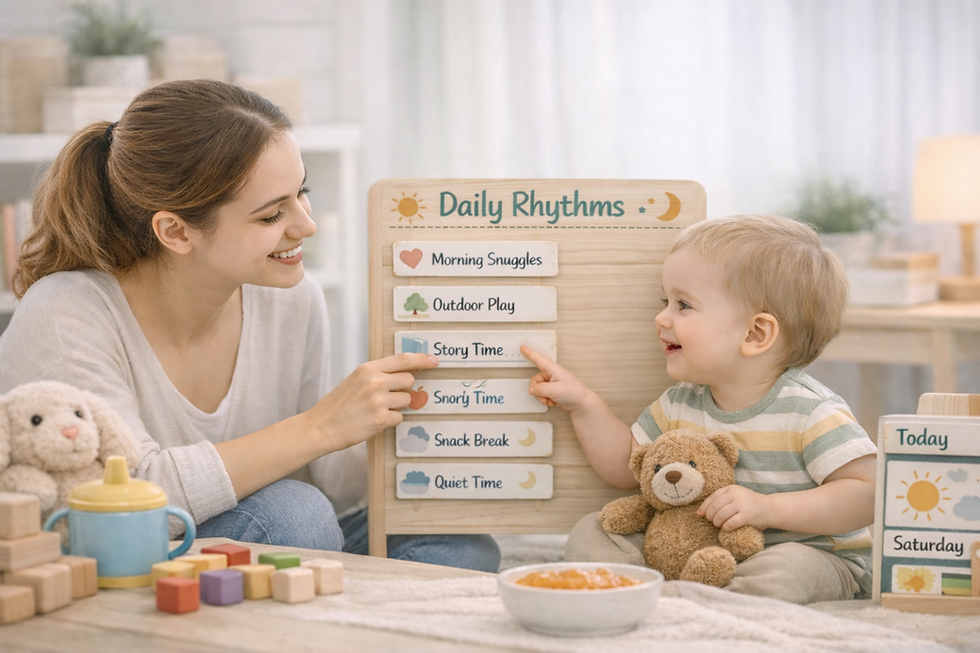
Finding calm in the middle of that can feel impossible — but calm doesn’t mean quiet. It means predictable.
Small environmental cues shape toddler behavior more than we realize. Soft lighting, slower pacing, gentle transitions, and intentional pauses can shift the entire energy of the home. When the environment feels steady, toddlers feel steady. And when toddlers feel steady, everything else gets a little easier.
Creating “reset moments” throughout the day helps break up the overwhelm — for them and for us. A few minutes of quiet play, a cozy reading moment, stepping outside for fresh air, or simply dimming the lights can bring everyone back to center. These aren’t grand strategies; they’re tiny adjustments that help the day breathe.
Creating a Calm Home Environment
A calm home environment isn’t about perfection. It’s about rhythm. It’s about knowing when to slow down, when to redirect, and when to protect your own energy without guilt. Because when you’re regulated, your child has a better chance of being regulated too.
Calm is something you create, not something you wait for.
What Works for Us
We’ve found that our home feels calmer when we build in natural pauses — five minutes of quiet play before transitions, soft music during meals, and dim lights in the evening. We also keep one or two “reset activities” ready: a simple sensory bin, a walk outside, or a familiar book that helps our toddler settle. And on the days when everything feels loud, we remind ourselves that calm isn’t the absence of noise — it’s the presence of intention.
From our family to yours,
Anthony & Leanne