.png)
When Early Toddler Tantrums Start to Appear
Hey there,
There’s a moment in early toddlerhood that feels like a shift in the air — the first signs of real tantrums starting to appear. Not the newborn fussing, not the hungry cries, but something new… something fueled by big feelings in a tiny body that doesn’t yet know what to do with them.
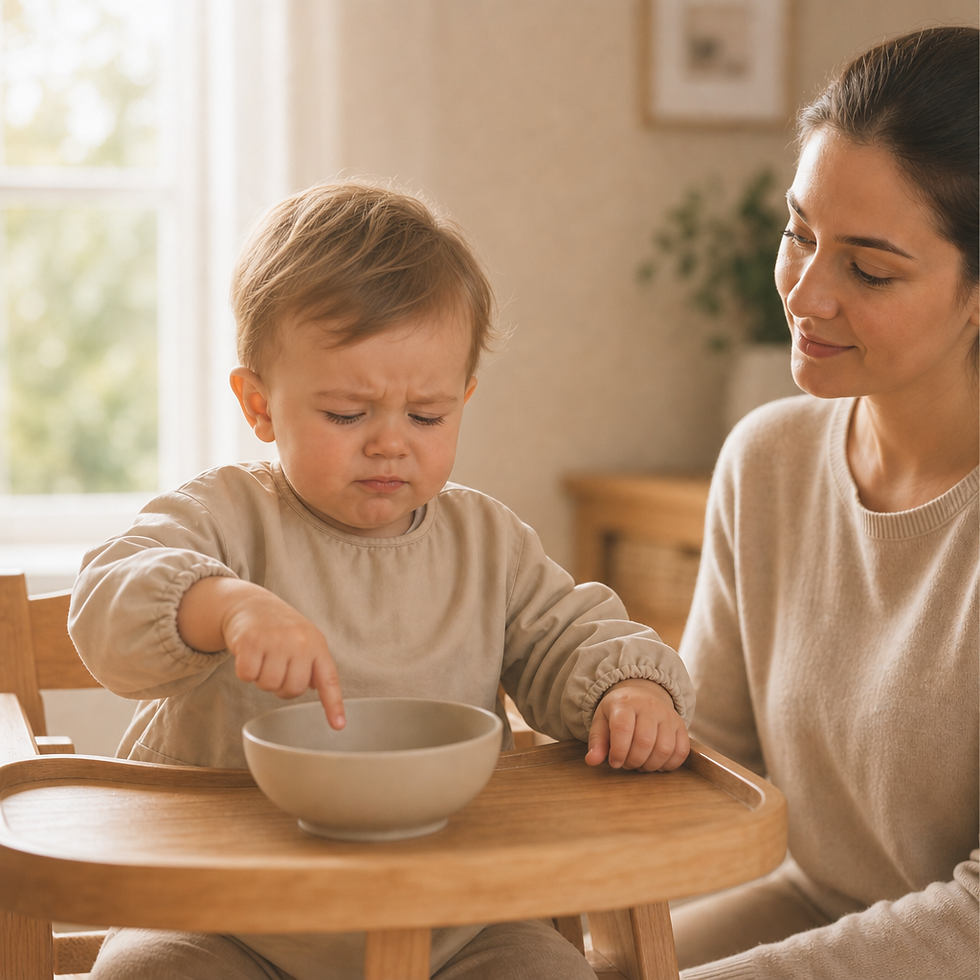
It often starts small. A toy doesn’t do what they want. A snack isn’t appearing fast enough. You pick them up when they want to crawl, or you put them down when they want to be held. Their face scrunches. Their body stiffens. And suddenly you’re watching the earliest version of a toddler meltdown take shape.
It’s surprising.
It’s intense.
It’s completely normal.
What makes this stage so emotional for parents is the realization that your baby — your once‑tiny, once‑quiet, once‑content little one — is now experiencing frustration, disappointment, and desire in a whole new way. They’re not just reacting to the world anymore; they’re wanting things. They’re forming opinions. They’re testing boundaries. They’re learning that independence comes with limits, and limits come with feelings.
In our home, those early tantrums felt like watching a storm cloud roll in on a sunny day — quick, dramatic, and over just as fast. One moment everything was fine, and the next our baby was arching their back, letting out a frustrated yell, or collapsing into a dramatic little heap on the floor. And right behind the frustration was something tender: the realization that these outbursts weren’t misbehavior… they were communication.
There’s humor in this stage too — the kind that keeps you grounded. Babies will:
throw themselves onto the floor because you peeled their banana “wrong”
cry because you won’t let them eat the dog’s food
get offended by gravity
protest diaper changes like you’re ruining their entire life plan
forget mid‑tantrum why they were upset and move on like nothing happened
But beneath the laughter is something deeper — the beginning of emotional independence. They’re learning:
that feelings can be overwhelming
that frustration is part of trying new things
that communication isn’t always easy
that they need help regulating what they can’t yet understand
It’s the earliest form of emotional growth. The earliest sign of I want to do it myself. The earliest glimpse of a toddler’s inner world taking shape.
We found that slowing down helped us navigate these moments with more compassion and less stress. Sitting close without rushing to fix it. Naming the feeling softly. Offering a calm presence instead of matching their intensity. Sometimes we’d read aloud during the tail end of a meltdown, letting the steady rhythm of our voice help them settle. Other times we’d simply wait, letting the storm pass naturally.
These early tantrums remind you that independence isn’t just physical — it’s emotional too. Your baby is learning how to handle disappointment, how to express needs, how to navigate a world that doesn’t always bend to their will. And you’re learning how to guide them through it with patience, empathy, and steadiness.
If you’re in that season right now — the season of sudden outbursts, dramatic flops, and feelings that arrive faster than your baby can process — I hope you give yourself grace. The pride. The frustration. The tenderness. The humor. The deep breath you take before stepping in to help.
Because this is one of the real truths of emerging independence: tantrums aren’t a sign of trouble — they’re a sign of growth.
From our family to yours,
Anthony & Leanne


