.png)
Navigating the Emotional Rollercoaster of Toddler Tantrums
Hey there,
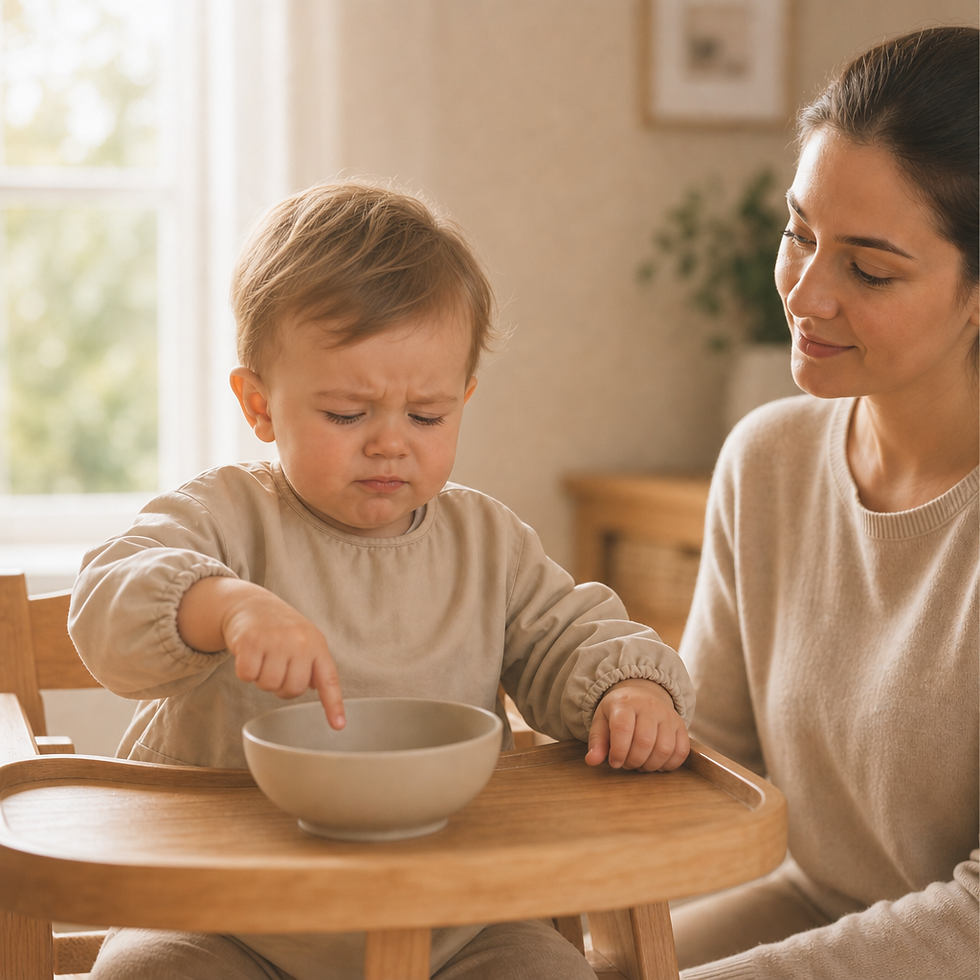
There’s a moment in this stage when emotions start arriving faster than your toddler can understand them — big feelings in a tiny body, sudden storms that appear out of nowhere, and reactions that feel larger than life. Tantrums aren’t new, but something shifts here: they become more expressive, more intentional, more tied to identity. Your toddler isn’t just overwhelmed — they’re learning how to feel.

Tantrums at this age aren’t misbehavior. They’re communication. They’re frustration without language. They’re independence without the skills to manage it yet. And they’re a sign that your toddler is growing emotionally, even when it feels chaotic.
In our home, this stage felt like riding waves — some small, some towering, all unpredictable. One moment our toddler was laughing, the next they were melting into a puddle because a banana broke in half. And while it was exhausting at times, it was also a reminder that their emotional world was expanding, and they needed us to help them navigate it.
There’s humor tucked into this season too. Toddlers will:
cry because you peeled the sticker too well
collapse dramatically over the wrong color cup
scream “no” and then immediately want the thing they refused
get offended by gravity
forget why they were upset halfway through
Their tantrums are intense, fleeting, and often unintentionally hilarious — but each one is a step toward emotional understanding.
But beneath the laughter is something deeper — the beginning of emotional regulation. They’re learning:
how to process frustration
how to express needs without words
how to recover from big feelings
how to trust your calm when they lose theirs
It’s the earliest form of emotional intelligence. The earliest sign of self‑awareness. The earliest glimpse of how they’ll learn to cope as they grow.
We found that staying grounded made all the difference. Sitting close. Speaking softly. Naming the feeling instead of fixing it. Offering comfort without forcing it. Sometimes we’d read aloud during the tail end of a meltdown, letting the rhythm of our voice help them settle. Other times we’d simply wait, letting the storm pass naturally.
These emotional rollercoasters remind you that growth isn’t always calm — sometimes it’s loud, messy, and overwhelming. Your toddler is learning how to feel deeply, how to express themselves, how to navigate a world that doesn’t always bend to their will. And you get to be the steady presence who helps them through it.
If you’re in that season right now — the season of sudden outbursts, dramatic flops, and feelings that arrive without warning — I hope you give yourself grace. The patience. The humor. The deep breath before stepping in to help.
Because here’s one of the real truths of toddlerhood: when your toddler rides the emotional rollercoaster of tantrums, they’re not falling apart — they’re learning how to put themselves back together.
From our family to yours,
Anthony & Leanne