.png)
When Separation Anxiety Begins to Show
Hey there,
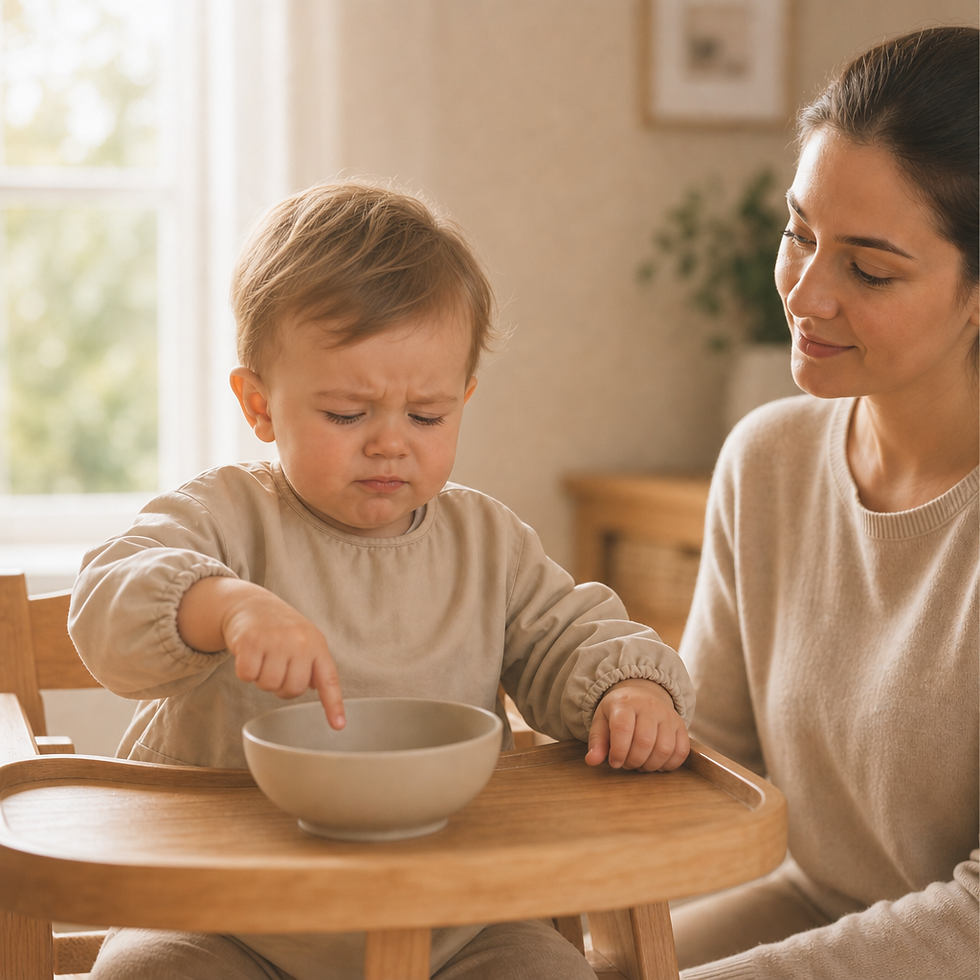
There’s a moment in early toddlerhood that feels both tender and unexpectedly intense — the first signs of separation anxiety. It doesn’t always arrive with a big scene. Sometimes it’s just the way your baby’s eyes follow you a little more closely. Sometimes it’s the sudden cling to your shirt when you stand up. Sometimes it’s the quiver in their lip when you walk toward the door.
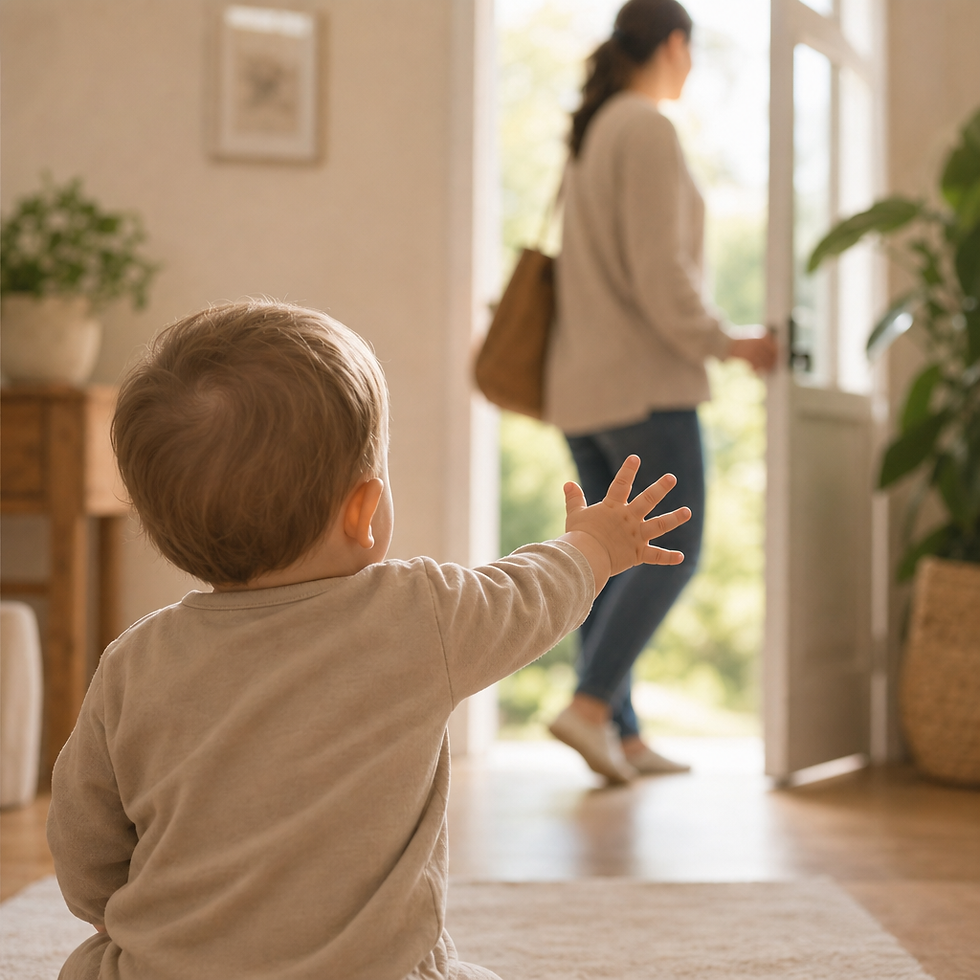
And then one day, it becomes clear:
they don’t just want you near —
they need you near.
What makes this milestone so emotional is the shift underneath it. Your baby is growing more independent every day — pulling up, cruising, exploring, trying things on their own — but at the same time, they’re becoming more aware of the world and their place in it. They’re realizing that you can move away… and that realization is big for a tiny heart.
In our home, those early signs of separation anxiety felt like a tug on both sides of the heart. We’d step into another room, and suddenly there was a cry that wasn’t just “I want something” — it was “Where did you go?” We’d hand our baby to a familiar family member, and they’d cling a little tighter before letting go. It wasn’t fear. It was attachment. Deep, growing attachment.
There’s humor in this stage too — the kind that keeps you grounded. Babies will:
cry when you leave the room but happily crawl away from you two minutes later
panic when you walk toward the bathroom like you’re never coming back
insist on being held until your arm goes numb
act like you’re abandoning them when you put them down to grab a snack
And then, just as quickly, they’ll be fine again — smiling, playing, exploring like nothing happened.
But beneath the laughter is something deeper — the beginning of emotional awareness. They’re learning:
that people come and go
that connection matters
that they feel safest with you
that their world changes when you move
It’s the earliest form of attachment security. The earliest sign of emotional depth. The earliest glimpse of how much your presence anchors them.
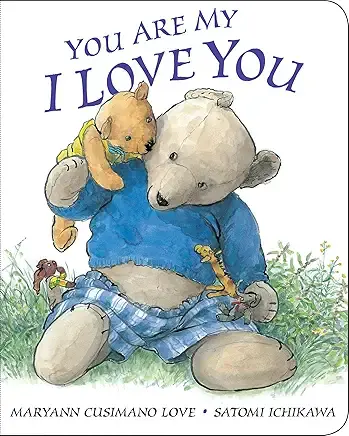
We found that slowing down helped us navigate this season with more softness. Narrating when we stepped away. Offering a quick touch or smile before leaving the room. Returning with warmth so they learned that “gone” always leads back to “here.” Sometimes we’d read aloud from across the room so they could still hear our voice. Other times we’d simply sit close until they felt steady again.
These early signs of separation anxiety remind you that independence doesn’t grow in a straight line — it grows in waves. Your baby is learning how to explore the world while still needing the comfort of the person who makes that exploration feel safe.
If you’re in that season right now — the season of clingy mornings, teary goodbyes, and tiny arms reaching for you with urgency — I hope you give yourself grace. The tenderness. The patience. The ache. The sweetness of being someone’s safe place.
Because this is one of the quiet truths of emerging independence: your baby pulls away to grow — but they reach for you to feel safe enough to try.
From our family to yours,
Anthony & Leanne